
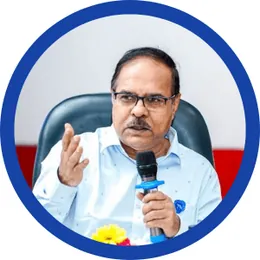
Dr. Aminur Rahman
Executive Director
PhD, Karolinska Institutet. Director of the International Drowning Research Centre Bangladesh and Portfolio Director for Drowning Prevention at the Royal Life Saving Society Commonwealth.
Design concept prepared for CIPRB's website tender. This is not an official CIPRB website.
Who we are
CIPRB began its journey in 2005 with a vision to eliminate injuries from Bangladesh. Its work now spans health, safety and community development, and has been replicated across several Asian countries.
Twenty-one years
CIPRB founded on 6 February, following the Bangladesh Health and Injury Survey.
Contributed to the World Report on Child Injury Prevention.
Reproductive and Child Health division launched, followed by the Non-Communicable Disease, Road Traffic Injury and International Drowning Prevention and Research divisions.
Community-led child drowning prevention measures developed and recognised internationally.
Maternal and Perinatal Death Review and Quality Care Model established. Bangladesh Health and Injury Survey repeated.
Nationwide Blindness Survey conducted with National Eye Care and the Directorate General of Health Services.
United Nations Resolution on Drowning Prevention adopted.
WHO recognises Anchal, SwimSafe and first responder training as best practice for low and middle income countries.
Bangladesh Health and Injury Survey conducted across all 64 districts. World Health Assembly adopts its resolution on drowning prevention.
Government adopts the model. The Bangladesh Shishu Academy takes over 2,299 childcare centres and 57,475 children, and scales to 8,000 centres nationwide.
How we work
CIPRB's Safeguarding Policy for Children and Vulnerable Adults has been in force since 2019, with mandatory orientation for all staff at head office and in the field, a visitors' code of conduct, and a seven-member safeguarding committee chaired by the Executive Director.
What that means for the images on this site
Leadership
CIPRB's research and programmes are directed by a team with doctoral training at Karolinska Institutet and Hamamatsu University School of Medicine, and with clinical, programmatic and policy experience across the Bangladeshi health system.
Executive Director
PhD, Karolinska Institutet. Director of the International Drowning Research Centre Bangladesh and Portfolio Director for Drowning Prevention at the Royal Life Saving Society Commonwealth.

Deputy Executive Director
MPH and PhD, Karolinska Institutet. Responsible for the organisation's operations since 2015, alongside his research role.

Director, Reproductive and Child Health
Obstetrician and gynaecologist. PhD, Hamamatsu University School of Medicine; MPH, Karolinska Institutet; FCPS and MS in Obstetrics and Gynaecology. Over thirty years across clinical, programme and research work, leading the department since 2010.

Team Leader, Reproductive and Child Health
MPH, North South University; MSc in Microbiology and a degree in veterinary medicine, Bangladesh Agricultural University. More than fifteen years in public health and over thirty published research articles.
Accountability
CIPRB's accounts are externally audited every year and published in full in the annual report. Nothing below is an estimate.
Annual reports